





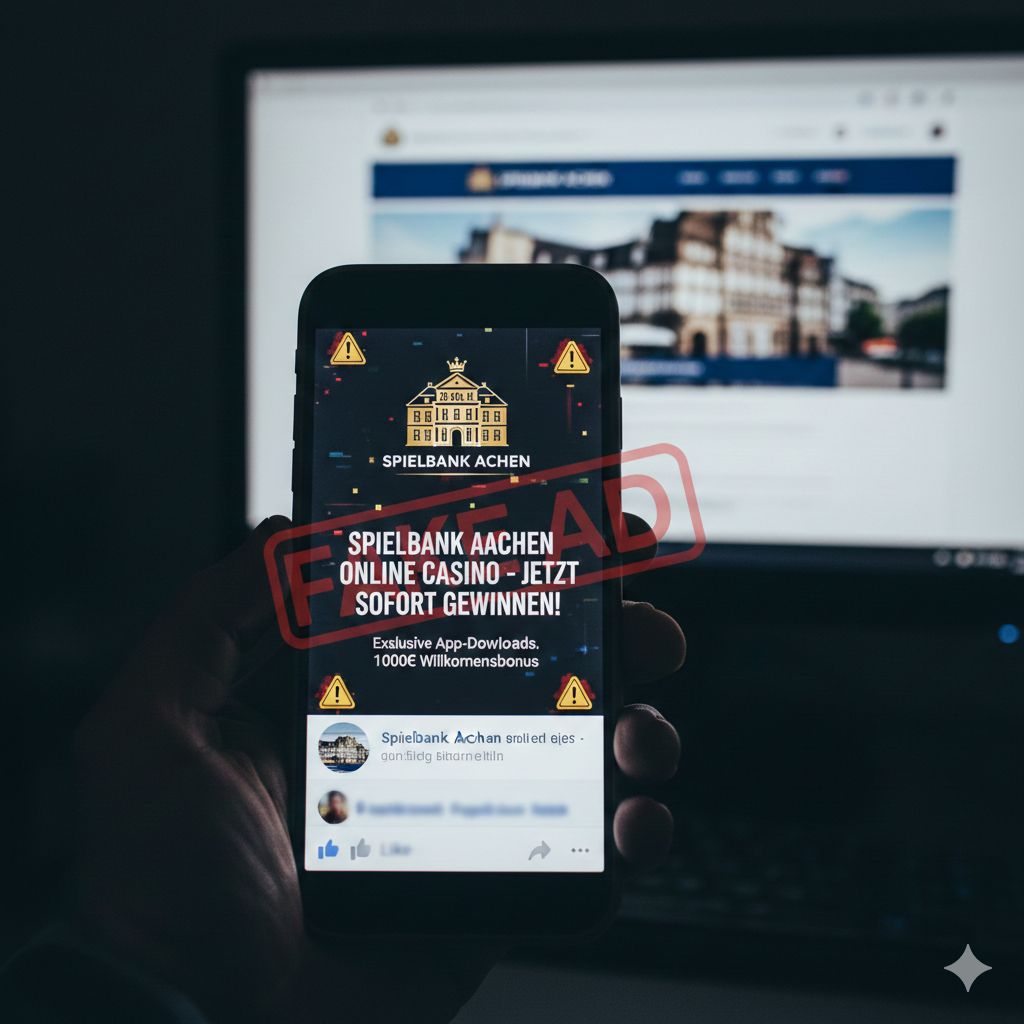
 The Casino Aachen in particular has recently been the target of such fake advertising on several occasions. Users see ads promoting what appears to be the casino's official online casino. However, anyone who clicks on these ads ends up on dubious sites offering illegal gambling or fraudulent apps that look like genuine casino platforms at first glance. The Aachen Casino makes it clear that it does not operate any online casino, does not authorize or control such advertisements, and is taking legal action against the fake ads.
Other German casinos have reported similar incidents. Casino Baden-Baden, one of the oldest and best-known casinos in Europe, is increasingly confronted with fake profiles and advertisements promising alleged online services. Those responsible expressly point out that the casino does not offer a gaming app or an online casino. Any advertisement claiming otherwise is fake. The casino regularly warns its guests not to respond to such advertisements or disclose personal data. Similar warnings have been issued in Berlin, Lower Saxony, Saarland, and other federal states. There are increasing numbers of cases in which casinos have to “reclaim” their own names on social networks because fraudsters are misusing them as a cover.
The extent of fraud attempts is greater than it appears at first glance. In October alone, a Berlin-based consulting firm documented over 75,000 advertising campaigns in Germany that were misleading or fraudulent – many of them in the gambling sector. The scam is often the same: users are tricked into clicking via social media advertising or fake accounts. The ads look legitimate, use real logos, copy the brand design, or use deceptively similar profile names. But behind the professional appearance is a network of fraudsters who want to lure users to illegal platforms or encourage them to transfer money. These apps often pretend to represent an official casino without users immediately recognizing that the operators are based abroad and do not have a license for Germany.
One key reason why fraudsters choose these particular brands is their high profile. Casinos such as Aachen, Berlin, and Baden-Baden traditionally enjoy a high level of trust. They stand for state-regulated gambling, physical control, and a high level of player protection. It is precisely this trust that fraudsters exploit by pretending that the casinos have “modernized” their business model and are now also active on the internet.
This issue poses major challenges for the casinos. Although they try to take action against fake profiles and advertisements, those responsible are often anonymous, based abroad, or use technical methods that make them difficult to track down. In addition, new fake accounts can be created within minutes, even if the operator has previously taken successful action against an advertisement. Many casinos report having to report new fraudulent profiles on a daily basis.
The increasing prevalence of such fake advertisements shows how much the digital fraud landscape has evolved. While classic spam messages used to be easy to spot, today's perpetrators use professional designs, reliable brands, and targeted algorithms to reach as many people as possible. This presents casinos with an image problem that they did not cause themselves, but still have to deal with.
For users, one thing remains particularly important: vigilance. Anyone who sees an advertisement on social media for an online casino bearing the name of a well-known German casino should treat this advertisement with great skepticism. The safest way to identify reputable and licensed providers is to check the official whitelist of the Joint Gaming Authority of the German States (GGL). Only companies listed there are legal in Germany.
Want to stay up to date? Subscribe to our newsletter and follow us on LinkedIn, X and Facebook.