




I. Background
For years, gambling operators have been confronted with an unprecedented wave of so-called player claims. Claims for repayment of gambling losses, based on allegedly void gambling contracts, dominated court practice. These claims were filed in large numbers, frequently financed by litigation funders and pursued through highly standardised pleadings. For a considerable period, it appeared that this development could only be countered with significant resources, while a seemingly risk-free business model had emerged on the claimant side.

As already outlined in our recent TLN (How operators successfully defend player claims, by Timelaw-Litigator Maximilian Krietenstein), courts are increasingly moving away from the supposed “standard issues” of these proceedings. Instead of focusing exclusively on fundamental questions - most notably the compatibility of former gambling regulations with EU law - courts are increasingly addressing secondary yet decisive legal aspects. These include player-participation from abroad, standing issues arising from assignments to litigation funders, and the plausibility and internal consistency of the claimant’s submissions in each individual case. This development has enabled us to achieve a consistently above-average success rate for our clients, supported by access to top-tier external expertise from leading law professors who are highly regarded by the judiciary and reflected in our regular contributions to renowned legal journals.
The Munich Higher Regional Court’s decision against a player dated 27 November 2025 (case no. 3 U 3157/24e) is a representative example of the dozens of favourable high-court decisions our law firm has achieved across Germany. The vast majority of our first-instance successes are upheld on appeal by the higher courts, with only very few exceptions. The following excerpt from the above-mentioned court order illustrates the strength of our legal arguments and confirms that they also prevail at second instance:
“The Munich Regional Court I rightly dismissed the action and correctly denied the claimant’s claim for reimbursement of the stakes paid. Reference is made to the judgment at first instance. Even taking the appeal into account, no different assessment arises. The extent of the claimant’s participation in the defendant’s online games of chance within the scope of application of the Interstate Treaty on Gambling 2012 cannot be established. In the absence of a violation of Section 4(4) of the Interstate Treaty on Gambling 2012, there is therefore - irrespective of the issue of active standing and any potential incompatibility with European law - no claim by the claimant for reimbursement. In detail: […]”
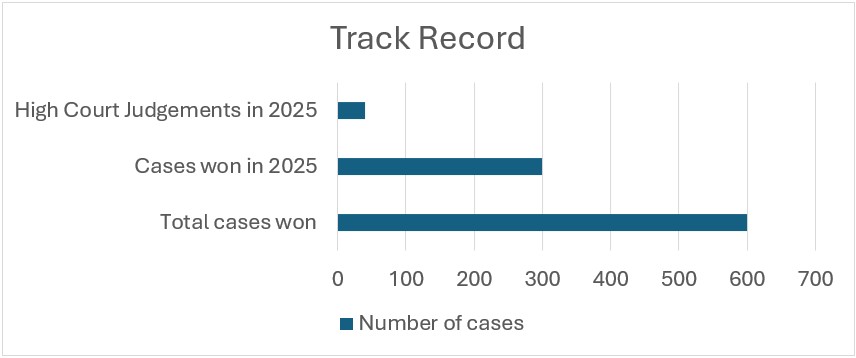
This trend has not only continued but has accelerated significantly in recent months. With a team of 15 specialised gambling law experts, we obtained several dozen favourable Higher Regional Court decisions in the past year alone, the majority of which are now legally binding.
These results were not achieved through a schematic defence strategy, but through a consistently strategic and individualised approach. As described in our last TLN, from the outset we have focused on analysing each case on its own merits and targeting the structural weaknesses of player claims. In numerous proceedings, player participation from abroad led to claims being dismissed as insufficiently substantiated. Similarly, the widespread practice of assigning claims to litigation funders has proven legally vulnerable, particularly with regard to standing and the right to sue. In addition, standardised pleadings often fail to withstand detailed factual and procedural scrutiny. As a result, the much-discussed proceedings currently pending before the CJEU (see below) have little impact for cases defended and won by our law firm.
Beyond the success achieved in a large number of cases, a further decisive development has now emerged: the purely defensive phase has ended. Our clients are now able to take an active role and enforce the recovery of legal costs arising from binding judgments against players. Legal costs are being recovered, economic dynamics are changing, and initial effects are becoming visible among litigation funders and claimant lawyers.
What was already apparent as a clear trend last year (see insofar previous TLN) has now become reality. Hambach & Hambach has won more than 600 cases, including over 300 in the past year alone, among them several dozen Higher Regional Court decisions.
This has resulted in a remarkable overall situation: while players and litigation funders, under Maltese law, are often unable to enforce judgments against our clients due to public policy considerations, our clients are increasingly able to initiate enforcement measures against players and litigation funders themselves.
Final judgments are no longer recorded merely for statistical purposes but are enforced consistently. Court fees, legal costs, and other expenses are being recovered comprehensively and with determination.
The effects of this development are substantial. Players - and consequently the litigation funders behind them - are now exposed for the first time to direct and immediate economic consequences. Litigation funders, whose business models assumed of a largely risk-free environment, are coming under significant pressure and are unable to absorb the enforcement risks that have materialised. As a result, the willingness to finance new claims is declining noticeably. The balance of power is therefore shifting sustainably in favour of our clients.
The success of Hambach & Hambach is the result of a clear and consistent strategic approach, which is now paying off in full. Each case is assessed individually, factual and legal weaknesses are identified with precision, and a tailored defence strategy is developed accordingly. The issues currently pending before the CJEU (including cases C-530/24, C-440/23, C-9/25, C-778/25, and C-898/24), which concern a wide range of different legal aspects, consequently, recede into the background. What ultimately proves decisive are the legal details that are often overlooked in mass litigation but determine the outcome in court.
II. Possible influence of the Wunner judgement
The CJEU has issued its judgment in case C-77/24 (Wunner), clarifying certain conflict-of-laws aspects in cross-border disputes related to online gambling.
The case arose from a reference by the Austrian Supreme Court and concerned an Austria-resident player seeking reimbursement of gambling losses from the directors of a Malta-based online casino. The operator allegedly offered online gambling services in Austria without the required national licence and subsequently became insolvent. The claim was therefore brought directly against the directors in tort, alleging breaches of mandatory gambling and player-protection laws.
The CJEU addressed two issues under the Rome II Regulation. First, it held that tort claims against directors based on alleged infringements of gambling and player-protection rules are not excluded as company-law matters. Second, in cases of pure financial loss, the Court confirmed that the place where the damage occurs is the player’s habitual residence, resulting in the application of the law of that state.
While the decision may be taken into account in future player-claim litigation, its practical significance should not be overstated. Under German law, tortious liability of directors vis-à-vis third parties remains exceptional and subject to strict requirements, including director-specific conduct and fault. Breaches of corporate duties primarily give rise to internal liability towards the company and do not, as such, establish direct claims by players.
The decision is unlikely to have a significant impact on the question of whether claims are inconclusive if the player cannot prove that all participation in the games took place from Germany. Insofar, it should be noted that all Higher Regional Courts to date have consistently confirmed the applicability of German civil law. The decisive issue therefore remains the assessment under substantive law.
In this context, any participation in games offered from abroad remains relevant. Most of the Higher Regional Courts have rejected claims where the extent of such foreign participation could not be clearly established, and there is no indication that the CJEU’s judgment alters this established approach.
Furthermore, Advocate General Emiliou emphasised the need to draw a strict distinction between the applicability of German law pursuant to the Rome I Regulation and the scope of application of the German State Treaty on Gambling. This position has recently been echoed in opinions issued at Higher Regional Court level. The CJEU’s reasoning should therefore be read in its proper context and does not, as such, suggest a shift in the substantive assessment of player claims.
III. Consequences
Overall, the ruling in the Wunner case is unlikely to have a big material impact on the prevailing case law. Its practical relevance will depend on how national courts integrate the CJEU’s statements into their existing analytical framework. Moreover, important questions concerning player claims are still pending before the CJEU (see above), and limitation periods continue to apply. The practical impact of Wunner will therefore largely depend on how national courts, particularly in Germany, interpret and apply the ruling in future cases.